
Introducing Project Hope: Westside’s Commitment to Ending the ABA Waitlist
IN SHORT Project Hope is Westside Children’s Therapy’s initiative to expand ABA therapy into weekday […]
Therapy
At Westside, our ABA team brings a passion for changing kids’ lives. BCBAs, RBTs, speech therapists, and occupational therapists work together so no part of your child’s progress falls through the cracks.
We believe therapy should be more than an hour in an isolated room. It should be a relationship built on trust that helps children grow with confidence and look forward to coming back.
Applied Behavior Analysis (ABA) therapy is a research-based treatment approach most commonly used with children who have been diagnosed with autism spectrum disorder (ASD). ABA focuses on understanding how behavior works, how learning takes place, and how the environment shapes both.
ABA therapy helps children build skills across communication, social interaction, self-care, and learning, while also reducing behaviors that get in the way of everyday life. It is one of the most studied and widely recommended approaches for children with autism.
At Westside, ABA therapy is delivered by Board Certified Behavior Analysts (BCBAs) who design individualized treatment plans for each child. Sessions are led by Registered Behavior Technicians (RBTs) who work under close BCBA supervision.
ABA at Westside doesn’t automatically mean 40 hours a week.
We believe therapy should fit the child, not the other way around. Every child is different, which is why our ABA recommendations are individualized based on your child’s needs, goals, and the level of support that will make the greatest impact.
There is no one-size-fits-all number of ABA hours at Westside.
ABA helps children with autism learn new skills and work through challenging behaviors using positive reinforcement. Children make progress in communication, independence, and social connection over time. Goals are based on your child’s specific needs, not a standard curriculum.
ABA is best known as an autism intervention, but the approach can support any child who benefits from structured learning and skill-building. It is also used for children with developmental delays, ADHD, and other behavioral needs.
At Westside, ABA does not look like a child sitting at a table running drills. Sessions are built around natural environment teaching. Your child learns through play, movement, peer interaction, and activities that feel meaningful to them. Our clinics host talent shows, animal visits, and seasonal events. We want kids to look forward to coming in.
A Board Certified Behavior Analyst (BCBA) is a licensed clinician who evaluates your child, creates their treatment plan, and supervises therapy. A Registered Behavior Technician (RBT) carries out the plan during sessions under the BCBA’s direction. At Westside, BCBAs stay actively involved in each child’s care throughout.
IN SHORT Project Hope is Westside Children’s Therapy’s initiative to expand ABA therapy into weekday […]

QUICK ANSWER While you’re waiting for a spot to open up, stay in close contact […]

Why Collaboration Isn’t Automatic, Even With a Great Team It’s easy to assume that if […]
Our ABA services focus on helping children build skills that matter in everyday life. Through clinic-based therapy, we help children develop skills that can be used in everyday life, supporting success at home, at school, and in social settings. This includes developing practical skills like getting dressed, asking for help, and interacting with peers. As these abilities grow, children often become more confident and independent in their daily routines. Our goal is to help your child navigate everyday life with greater ease and confidence over time.
Find an ABA Therapy Location Near You
LOCATIONSThis is one of the first questions most families ask, and it deserves a real answer. There is no single right number of therapy hours for every child.
When a BCBA at Westside develops a treatment plan, they look at the whole picture. That includes the number and complexity of your child’s goals, any behaviors that may be getting in the way of learning, co-occurring medical needs, and what level of family involvement will best support progress at home.
We do not believe that more hours automatically means more progress. What matters is whether your child is moving toward goals that improve their quality of life and help them thrive at home, at school, and in their community.
Across the ABA industry, some providers routinely recommend 30-40 hours of therapy per week for most children. While that level of support could be appropriate for some children, we do not believe there is a single number of hours that is right for every family.
At Westside, we take an individualized approach. Our goal is to recommend the level of support each child truly needs – not the maximum amount of therapy possible. As a result, Westside’s ABA program generally averages fewer than 20 hours per week. Today, that average is around 15 hours per week.
25-40 hours per week
15 hours per week
At the same time, we believe consistency matters. Once a family and clinical team have developed a treatment plan together, children are most likely to make progress when they receive enough therapy to build skills, maintain momentum, and achieve the goals that matter to them. For that reason, we work closely with families to create treatment plans that are both clinically appropriate and realistic for family life.
Most importantly, these decisions are never made in isolation. Parents and caregivers are essential members of the care team, and we partner with families every step of the way to create a plan that reflects their child’s needs, their family’s goals, and the life they want to build together
*Hours vary by child based on individualized treatment plans. Source: Autism Speaks
Want a deeper explanation of how therapy hours are determined?
→ Read: How Much ABA Therapy Does My Child Need
Treatment plans are never fixed. Your child’s BCBA continuously reassesses their development and adjusts hours and goals as they grow. Your family is part of every decision along the way.
Most families start noticing meaningful changes within 3 to 6 months, though the timeline depends on your child’s goals, hours of therapy, and how consistently skills are reinforced at home. Progress is not linear. Some skills come quickly, others take longer. Your child’s BCBA tracks progress closely and keeps you updated throughout.
Not at Westside. We believe the 40-hour-per-week model is outdated, and it stems from older research; more recent evidence shows that quality and fit matter as much as quantity. That’s why we take an individualized approach to recommend the level of support each child truly needs – not the maximum amount of therapy possible. As a result, Westside’s ABA program generally averages fewer than 20 hours per week. Today, that average is around 15 hours per week.
Your child’s BCBA tracks progress during every session and reviews it regularly. You will see that reflected in updated treatment plans and goal benchmarks. Families at Westside have direct access to evaluations and progress notes, and we make time for real conversation along the way, not just formal check-ins.
Consent-based care: We build cooperation through trust, never force. We honor what a child communicates, even when they cannot yet use words.
Engaging environments: Our clinics host talent shows, animal visits, and seasonal events. We want kids to look forward to coming in.
Family involvement: Siblings are welcome. Families receive photo updates throughout the day. You stay informed, not just at scheduled check-ins.
Full transparency: You have immediate access to your child’s evaluations and progress notes. Before therapy begins, you will know the week-by-week cost. No surprises.
Find an ABA Therapy Location Near You
LOCATIONSWe know families have work schedules, siblings, school routines, and all the unpredictability that comes with real life. If you need a shorter week, different timing, or flexibility around certain commitments, we work with you to find an arrangement that makes sense.
After-school slots are in high demand, and we are upfront with families about that. But we do not give up. We actively work to find availability and reach out as soon as something opens up.
Have questions about scheduling, after-school appointments, or balancing therapy with your family’s routine?
→ Read: Scheduling ABA Therapy: What to Expect
After-school slots are available at Westside, though they fill up quickly. We are upfront with families about current availability and work to accommodate your schedule. When an opening comes up that fits your needs, we will reach out.
Yes, and many children do. A schedule where a child attends both school and therapy is common and often works really well. As school readiness grows, the balance gradually shifts. Our team coordinates directly with your child’s school to help make the transition as smooth as possible.
Life happens. If your family’s needs change, we work with you to adjust whenever we can. We want to be flexible partners, not rigid appointment holders.
The best progress doesn’t stay in the clinic. It follows your child home, into the car, to the dinner table, and out into the community. That’s why parent training is a built-in part of every ABA program at Westside, not an afterthought. Your BCBA will meet with you regularly (based on your child’s authorized hours) to make sure you have the strategies, confidence, and context to keep the momentum going.
Those sessions are practical by design. We’ll walk you through the behavior strategies your child is working on, how to generalize new skills into everyday routines, and how to respond when challenging behaviors come up outside of therapy. Siblings are always welcome when it makes sense, and we meet every family where they are with empathy, honesty, and a plan that actually fits your life.
Learn more about how we help families build confidence outside therapy sessions.
→ Read: Family Support: How We Keep You Involved
As involved as makes sense for your family. We share guidance on how to reinforce skills at home, and we welcome your participation whenever you want it. Siblings can be part of things too. We do not expect families to run therapy sessions at home. But the more connected therapy is to your child’s real world, the more it tends to stick.
Yes. Families at Westside receive photo updates throughout the day and have direct access to evaluations and progress notes. We also make time for real conversation. We want there to be room for questions, collaboration, and shared problem-solving, not just formal check-ins.
Talk to us. If something comes up, we want to hear about it. We try to be real with families about what we can offer, what challenges may come up, and what is going well. You should never feel like you are navigating this on your own.
School is ultimately where we want your child to flourish. That is the goal we are working toward from day one. But we do not expect every child to be fully ready on a predetermined timeline, and families will never feel pressured to move before it makes clinical sense.
When the time comes, we coordinate directly with schools to support the transition. In many cases, a schedule where a child attends both therapy and school works well, with the balance gradually shifting as readiness grows. The specific arrangement depends entirely on your child and your school’s situation.
Learn more about how we prepare children for school and support families through the transition.
→ Read: Transitioning to School
Graduation means equipping your child with the skills to succeed in school, and then helping them get there at a pace that works.
There is no single milestone that marks the end of ABA therapy. Graduation looks different for every child. At Westside, the goal is for your child to have the skills they need to succeed in school and everyday life. When they get there, we help coordinate the transition rather than just ending services.
We coordinate directly with your child’s school to share relevant information and make sure there is continuity of support. We also work with families to plan a schedule where therapy and school attendance overlap during the transition, if that is what makes sense.
Not if we can help it. Our goal is to get your child the skills they need and back into the classroom, not to keep them in therapy indefinitely. We work to build independence, not dependency. Your child’s BCBA will be honest with you about where your child stands developmentally and what the path to transitioning out of services looks like.
Children rarely have needs that fall into just one therapy category. Our ABA team works alongside Westside’s speech-language pathologists, occupational therapists, physical therapists, counselors, and feeding specialists. We handle the coordination so you do not have to.
See how our ABA team collaborates across disciplines to support your child.
→ Read: Coordinated Care Across Services
Many children benefit from more than one type of therapy. ABA focuses on behavioral skill-building and learning. Speech therapy focuses on communication and language development. These often go hand in hand, and Westside offers both. Your child’s evaluation will help point toward the right combination.
Yes. Many children at Westside receive multiple services at once, and our teams coordinate with each other so that goals are aligned and therapy time is well spent. You will not need to manage communication across separate providers.
ABA focuses on behavioral learning, building communication, social, and adaptive skills through positive reinforcement. Occupational therapy focuses on a child’s ability to do everyday activities, including fine motor skills, sensory processing, and self-care. Both can be helpful for children with autism, and they often work best together.
We provide a clear cost breakdown before therapy starts. That includes what insurance typically covers, what your estimated out-of-pocket responsibility may be, and what the week-by-week cost looks like. If your child receives multiple services, we make sure the full picture is clear across all of them. No surprises.
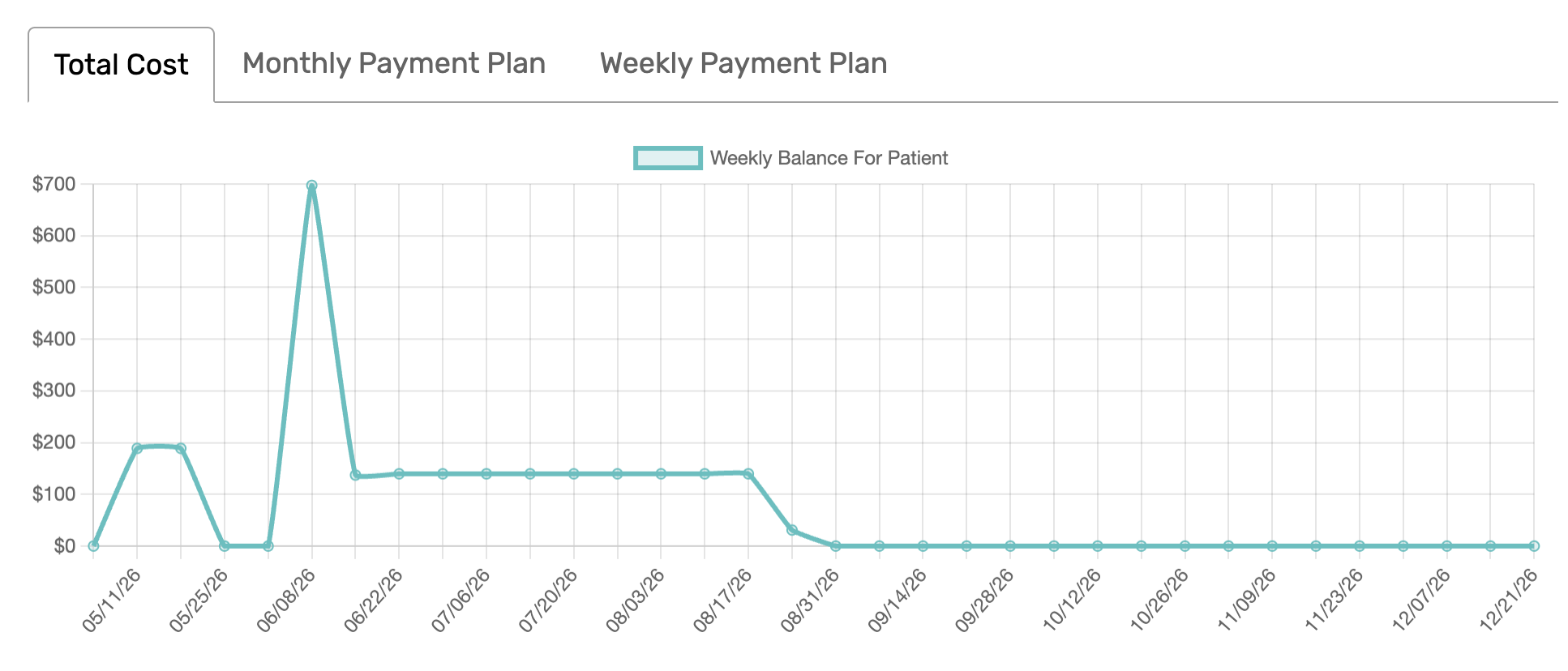
SEE AN INTERACTIVE ESTIMATE
Get a closer look at insurance coverage and what to expect before therapy begins.
→ Read: Understanding the Cost of ABA Therapy
Fill out the form below to receive a cost estimate based on your insurance coverage and the therapy services you are interested in.
Most major insurance plans are required to cover ABA therapy for children with an autism diagnosis. Coverage varies depending on your plan and provider. Westside works with families to verify benefits before therapy begins so you know what to expect. Visit our accepted insurance page to learn more.
The cost depends on the number of hours per week, your insurance coverage, and any out-of-pocket portion. Before your child begins therapy at Westside, we walk you through a clear week-by-week cost breakdown so your family can plan ahead.
Reach out to our team. We want every family to understand their options before walking away from services that could make a real difference for their child. We can help you work through insurance, funding sources, and scheduling arrangements that fit your situation.
Regional ABA
Regional ABA
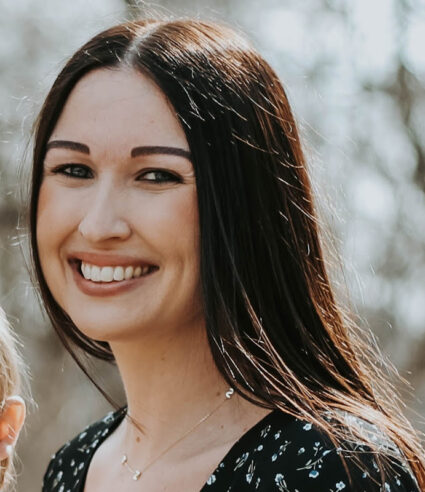
Ashley Fitzenreider earned a Bachelor of Science in Family Studies from Western Michigan University and a Master of Science in Applied Behavior Analysis from The Chicago School of Professional Psychology. She is a Board Certified Behavior Analyst (BCBA) and Licensed Behavior Analyst (LBA) with about 15 years of experience in the field of ABA.
Ashley began her career supporting adults with intellectual and developmental disabilities before transitioning to a therapeutic day school autism program and later providing home-based ABA services in close partnership with children and their families. She has been with Westside Children’s Therapy for the past eight years, starting as a Registered Behavior Technician (RBT) and growing into her current role as Senior Regional ABA Director. Her clinical specialties include Functional Communication Training (FCT), Verbal Behavior, treatment planning and clinical recommendations, medical necessity reviews, and mentorship and supervision of BCBAs.
Outside of work, Ashley enjoys spending time with her family—her husband and two kids, Cameron and Savannah. She loves cooking, trying new restaurants, kayaking, and boating, and she and her family take as many trips as they can to their home up north in Wisconsin throughout the year.
Regional ABA
Regional ABA
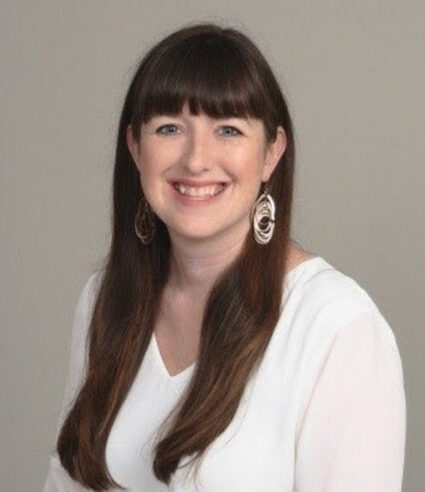
Brenda Boehm holds an MA in Special Education and is a Board Certified Behavior Analyst (BCBA) and Licensed Behavior Analyst (LBA). She has worked in the ABA field since 2000, beginning her career in Wisconsin and building more than two decades of experience supporting children with autism and their families.
Her work has included serving as a Clinic Director in Australia, launching both home-based and center-based ABA programs in Malaysia for families in Malaysia and Singapore, and starting centers in Wisconsin and Illinois before joining Westside as a Regional ABA Director in 2026.
An experienced ABA leader, Brenda brings a strong track record in multi-site leadership and clinical operations, with a focus on clinical quality and operational performance. She is passionate about building mission-driven teams and driving excellence through data-informed decision making, OBM principles, and strategic leadership.
Outside of work, Brenda enjoys spending time with her husband and two teenage sons, walking her dog, playing cards (especially Euchre), and visiting family in Wisconsin.
Regional ABA
Regional ABA
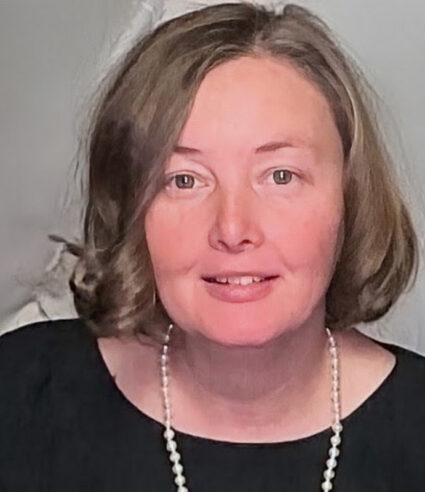
Kimberly Winkelman is a Board Certified Behavior Analyst (BCBA) with more than a decade of experience supporting children and families through compassionate, evidence-based care. She holds a Master of Science in Special Education from Northern Illinois University and a Master of Science in Psychology from The Chicago School of Professional Psychology. Kimberly is licensed as a behavior analyst in both Illinois (IL LBA) and Wisconsin (WI LBA).
Kimberly began her career in Applied Behavior Analysis (ABA) in 2012 and has held a variety of clinical, leadership, and family-support roles throughout her career. Since joining Westside Children’s Therapy in October 2021, she has served as Clinic ABA Director and currently serves as Regional ABA Director. Her experience also includes working as a Family Support Coordinator, where she partnered closely with families to identify needed services and provided education and training on autism and ABA, as well as serving as a Lead BCBA.
Before transitioning into ABA, Kimberly worked as a special education teacher, teaching life skills, providing individualized instruction, and co-teaching classes across all grade levels. This educational background continues to inform her family-centered approach and commitment to helping children build meaningful skills and greater independence.
Kimberly is passionate about collaborating with families and care teams to create supportive, individualized approaches that help children thrive. She values compassionate care, practical strategies, and empowering families with the knowledge and tools they need to support their children.
Outside of work, Kimberly enjoys hiking, traveling, and reading. Most importantly, she loves spending time with her husband and their two sons.
We do not accept Medicaid at this time.






Therapy is a relationship, not just a service.
If something comes up, we talk about it. We try to be real with families about what we can offer, what the timeline might look like, and what challenges may arise. We are here to support you, the whole family.
Complete the form below to start the process.
Explore daytime ABA therapy or schedule a no-cost autism evaluation with Westside.
ANSWERS IN DAYS, NOT MONTHS.