
What Does Pediatric Therapy Cost Without Insurance?
QUICK ANSWER Without insurance, pediatric therapy sessions across OT, PT, speech, and ABA typically range […]
Therapy
It can be tough when your child is having difficulty communicating. Sometimes, they just need the right support to build confidence and express themselves more clearly. Speech therapy helps children develop the skills they need to connect with others, share their thoughts, and feel understood.
Our speech therapists help children strengthen the skills they need to express themselves, connect with others, and participate more confidently in everyday life. They bring genuine energy, creativity, and enthusiasm to every session, helping kids forget they’re working hard. We believe children learn best when they feel free to be themselves, which is why therapy feels engaging, encouraging, and even a little goofy along the way.
Our speech therapists help children develop speech and language skills needed for effective communication. This is achieved through the evaluation and treatment of expressive and receptive language, speech production skills (articulation), social skills, and dysfluency (stuttering). We also facilitate augmentative or alternate communication skills through the use of an AAC device or PECs.
We strive to help your child find his or her voice. And we never forget that a kid is a kid by ensuring speech therapy is fun, safe, and inviting. Our expectation: life-changing results.
Many parents wonder what really changes when their child begins speech therapy. Does it support a child’s overall development, or is it simply a tool to improve pronunciation?
Pediatric speech therapy services or children’s speech therapy services make communication easier, yes, but they also prompt other significant changes in children, both inside and outside the classroom. Here’s how it can help:
• Improves speech clarity and articulation
• Enhances listening skills and comprehension
• Helps build stronger language skills (both vocabulary and sentence structure)
• Boosts social interaction, especially with peers
• Supports academic growth
• Increases self-esteem and confidence
Progress may happen gradually, but it’s meaningful and lasting. As children build these skills, they often begin to communicate more comfortably in everyday situations—at home, in school, and with peers.
Wondering whether speech therapy may be right for your child or what getting started involves?
→ Read: Common Signs Your Child May Need Speech Therapy
→ Read: What Is Speech Therapy for Children and Who Does It Help?
→ Read: Pediatric Speech Therapy: Insurance, Cost, and How to Get Started
QUICK ANSWER Without insurance, pediatric therapy sessions across OT, PT, speech, and ABA typically range […] If you’ve ever Googled “my child isn’t talking yet” at 10pm after a long day […] Some of the most powerful things you can do for your child’s speech development don’t […]Latest Insights
What Does Pediatric Therapy Cost Without Insurance?
Is It a Speech Delay or Just “Late Talking”? How to Tell the Difference

10 Simple Ways to Support Your Child’s Speech Development at Home
It may not always be easy to outline the speech challenges a child faces. Sometimes, the difficulties aren’t entirely obvious. It’s common for parents to find it hard to pinpoint the reasons for their child’s communication delays and troubles. A comprehensive evaluation (and subsequent treatment) can help in such cases. We support children to overcome:
Speech/Language Disorders
Receptive/Expressive Language Disorders
Central Auditory Processing Disorders
Language Processing Disorders
Articulation/Phonological Disorders
Social Communication/ Pragmatic Disorders
Voice Disorders
Fluency Disorders (Stuttering)
Autism
Apraxia
Group Therapy
Deaf/Hard of Hearing Services
Sign Language
Augmentative and Alternative Communication
Dysphagia (Swallowing Disorders)
Oral-Motor/Feeding Concerns
Not sure what may be behind your child’s speech or communication challenges?
Talk with our team, or explore the resources below for more guidance.
→ Read: Speech Therapy for Specific Needs: Autism, AAC, Stuttering, and More
→ Read: Speech Delay vs. Autism: What Is the Difference and How Do You Know Which One Your Child Has?
Early action generally produces better results, especially when dealing with language and speech delays. Early signs may be subtle. They may even seem like concerns that need no attention. But when the question, “Is this normal for my child’s age?” comes to your mind, scheduling a speech screening is essential.
Here’s why early support is necessary:
• Long-term outcomes improve when speech therapy starts early
• Pediatric speech therapy helps children build skills during their developmental years
• Early intervention helps reduce the likelihood of academic and social challenges
Even when you can’t explain it fully, your instinct as a parent matters.
Learn more about getting started with speech therapy at Westside
→ Read: What to Expect from Pediatric Speech Therapy at Westside
→ Read: How to Prepare for Your Child’s First Speech Therapy Evaluation
→ Read: What Happens During a Pediatric Speech Therapy Evaluation?

Evaluations begin with a one-hour session, led by a licensed therapist, in a private room. A summary report of therapy recommendations will be provided. At the conclusion of the evaluation, a summary of findings and recommendations will be provided. Any parent questions or concerns will be addressed during this time, as well.

Therapists guide your child through goal-based activities and track progress throughout. At the end of each session, parents receive feedback on their child’s progress.

Your child’s progress is carefully tracked, with measurable goals guiding each step of therapy. Our goal is to help every child reach their milestones and, when ready, proudly graduate from speech therapy.
Families want a safe place for their children to express their emotions. So, finding the right therapy provider is a huge decision that may take days of deliberation. For real progress, your child should have a team that will be part of their journey, not just observers. Here’s what sets Westside apart:
Communication changes everything, and when your child receives the support they need to communicate well, it enhances every part of their life. Imagine your child sharing what they did in school at the dinner table one evening after months of avoiding conversation. That’s precisely what we strive to achieve.
Speech therapy helps children:
• Express their needs, feelings, thoughts, ideas, emotions, and concerns clearly
• Build friendships and improve relationships within the family
• Participate in school activities and at social events
No step is small when it helps develop lasting confidence in communication.
Need help choosing the right speech and language support?
The resources below can help you explore your child’s options, and our team is happy to answer any questions.
→ Read: School-Based Speech Therapy vs. Private Speech Therapy: What Families Need to Know
→ Read: Speech Therapy vs. Language Therapy: What Is the Difference and Does My Child Need Both?
SLP
SLP
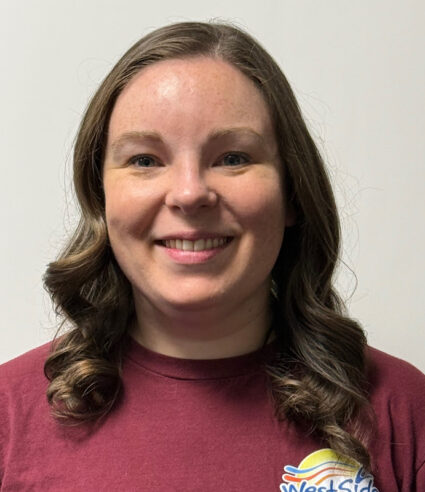
Allison Geary is a Speech-Language Pathologist who holds a B.S. Degree in Communication Science and Disorders from the University of Illinois at Urbana-Champaign, and a M.S. Degree in Speech-Language Pathology from Rush University.
She has experience working in early intervention and outpatient pediatric settings, as well as serving as a team lead prior to becoming a Speech Director. Her clinical specialties include craniofacial concerns including nasality/resonance difficulties, motor speech/apraxia of speech, and early language. She is also a feeding therapist with a focus on dysphagia/oral motor concerns, myofunctional therapy, and infant feeding.
Outside of work, Allison enjoys reading, crocheting, and taking walks with her dog.
SLP
SLP
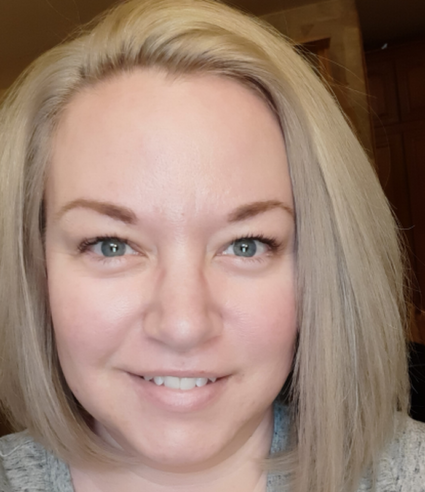
Kristalyn Turner, M.S., CCC-SLP, completed both her undergraduate and graduate studies at Eastern Illinois University. She began her career as a classroom aide before moving into a school-based speech-language pathologist role, building a strong foundation supporting children across a range of communication needs.
Kristalyn later joined Westside as a full-time SLP, advanced to clinic supervisor, and now serves as Speech Director. She has a special clinical interest in pediatric feeding disorders, including dysphagia, and enjoys supporting children with autism and their families with practical, compassionate care.
SLP
SLP
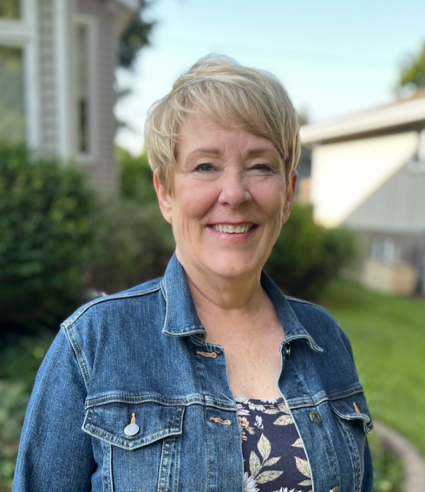
Pamela Kooi earned her Master’s degree in Speech/Language Pathology after attending Eastern Illinois University and Marquette University. She holds the American Speech-Language-Hearing Association Certificate of Clinical Competence (CCC) and is a Licensed Speech Pathologist in the State of Illinois. Pam brings a broad range of experience to her work, including working the past 11 years at Westside Children’s Therapy. While working at Westside, she has been a Lead Speech Therapist and currently fills the role of a Director of Speech Therapy.
Pamela specializes in supporting children with language disorders, phonological disorders, childhood apraxia of speech, and gestalt language processing. She is known for a thoughtful, individualized approach that helps children build communication skills and confidence while partnering closely with families.
Outside of the clinic, Pamela enjoys spending time with family and friends, rescuing senior dogs and supporting the Chicago Cubs!
Pediatric speech therapy focuses on helping children communicate more effectively. The therapy process is designed to take individual needs into account and address specific language and speech delays. The goal is to improve overall communication skills and ensure lasting progress. Therapists at Westside work to improve speech clarity and promote language development through structured techniques and play-based learning.
Determining whether your child requires speech therapy can be challenging with limited information. If you’re wondering whether you should schedule a consultation, note that children with the following conditions might benefit from speech therapy:
There are many reasons for having over 1,000+ pediatricians refer to us for our children’s speech therapy services. The most important include our parents’ feedback and the provision of quality therapy services.
Every parent is sent a survey at the beginning, middle, and end of their therapy services. It asks: “On a scale of 1-10, how likely are you to refer your family or friends to Westside?”
Here is what parents say:
Average Beginning Score: 9.71/10
Average Middle Score: 9.83/10
Average End Score: 9.89/10
This is exactly why Westside is deemed the best.
While cost varies by insurance plan, number of therapy hours, and other factors, we still inform you on what you’ll expect to pay.
We have built a sophisticated cost calculator that looks at 19 factors that impact cost. When we run it, it shows you a week-by-week prediction of cost.
This estimate occurs after your evaluation, once we know the frequency of therapy. All you do is provide us with your insurance plan details, and we handle the rest.
We work with a wide variety of insurance companies and HMO networks. We are always expanding our network – click here to view the list of our currently accepted insurances.
Graduating kids from therapy is our goal. It means that we did our job and that the child’s communication difficulties have been addressed. We do everything we can to achieve progress as quickly as possible. There is ongoing communication between the family and the therapist about the child’s progress throughout the therapy process. When it is agreed that the concerns have been fully addressed, it is time to graduate AND celebrate!
At Westside, we generally treat children 0-18 years old. Our therapists are trained to work with kids, toddlers, and teens.
Similarly aged children typically come to therapy at the same time frames, too. For example, many of the teens come after school and socialize with each other as part of speech therapy.
Most Speech Therapy treatment sessions occur 1-2 times per week in the clinic. The frequency of treatment sessions is determined by the clinical recommendation of the speech therapist and is based on each child’s individual needs.
Our therapists teach the parents and the child how to carry over the skills at home and facilitate generalization of skills in other environments. This complements the in-clinic treatment and leads to lasting change.
Speech therapy evaluations are 60 minutes in length, and regular treatment sessions are 45 minutes long. The therapist will speak with the parent at the end of each session to provide a brief update on what was worked on. Often, outside exercises or practice ideas are provided at the conclusion, as well.
If you are interested, submit an inquiry below. Our Patient Coordinator will call to help you determine a plan forward. If you are still unsure, you can call us anytime at (815) 469-1500 for more information.