How ABA Therapy Prepares Kids for the Classroom
For many families, the long-term goal of ABA therapy is clear: get their child ready for school. Whether that means entering a general education classroom, participating in an inclusive setting with support, or thriving in a specialized program, school readiness is often the north star that guides everything else.
Here is how ABA therapy builds the specific skills children need to succeed in a classroom. For more on how we approach this at Westside, visit our ABA therapy at Westside page.
Following Instructions
One of the most foundational classroom skills is the ability to follow instructions from an adult who is not a parent. This includes one-step instructions, multi-step instructions, and instructions delivered to a group rather than directly to the individual child.1
ABA therapy builds instruction-following systematically, starting with simple, direct requests and gradually increasing complexity. By the time a child has mastered following varied instructions in different contexts, they are much better prepared to function in a classroom where directions come quickly and in many forms.
“Instruction-following is one of the earliest and most consequential skills we target in ABA. A child who can attend to and respond to adult direction in a group setting has unlocked access to almost every other learning opportunity the classroom offers.”
— Dr. Gregory Hanley, BCBA-D, Professor of Psychology, Western New England University2
Sitting and Attending
Classroom participation requires a child to sit, attend to instruction, and sustain focus for increasing lengths of time. For many children with autism, this is a significant challenge. ABA therapy directly targets sitting tolerance and attention span, building these capacities gradually in ways that translate to real classroom demands.3
Communication Skills
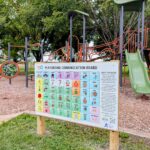
A child who can communicate their needs, ask for help, answer questions, and participate in simple conversations is a child who can engage with a classroom. ABA therapy works on functional communication across multiple modalities, whether that is verbal language, a communication device, or sign language.4
The goal isn’t just for your child to say words. It’s for them to use communication in meaningful ways, to express their wants, needs, thoughts, and feelings, and to connect naturally with the people in their everyday life.
Social Skills
Classrooms are inherently social environments. Children need to take turns, share materials, work alongside peers, navigate conflict, and read social cues. ABA therapy builds these skills deliberately, often in naturalistic settings that approximate the social demands of a real classroom.5
Peer interaction practice is a meaningful part of how ABA at Westside prepares children for school. Children learn with and alongside other children, not just in one-on-one adult interactions.
“Social competence in the classroom is not incidental to academic success. It is a prerequisite for it. Children who can navigate peer relationships, attend to group instruction, and communicate their needs are children who can access the curriculum.”
— Dr. Connie Kasari, PhD, Professor of Human Development and Psychology, UCLA6
Tolerating Transitions
Classroom life is full of transitions: from one subject to another, from the classroom to the gym, from a preferred activity to a less preferred one. Children who struggle with transitions often have a hard time in school settings, even when their academic and social skills are developing well.7
ABA therapy addresses transition tolerance directly, helping children build flexibility and the ability to shift between activities without significant distress.
Coordinating with Schools
At Westside, school preparation is not something we do in isolation. When a child is approaching school age or preparing for a transition to a new educational setting, we coordinate directly with the school. That means sharing relevant information about the child, aligning on strategies that support them, and helping plan a schedule that bridges therapy and school attendance smoothly.
For a full overview of how we support children and families throughout treatment at Westside, visit our ABA therapy at Westside page.
Clinically verified by Morgan Pawula, Board Certified Behavior Analyst, Westside Children’s Therapy
- Cooper, J.O., Heron, T.E., & Heward, W.L. Applied Behavior Analysis, 3rd ed. Pearson, 2020.
- Citation: Hanley, G.P., Functional Assessment of Problem Behavior: Dispelling Myths, Overcoming Implementation Obstacles, and Developing New Lore, Behavior Analysis in Practice, 2012
- Steinbrenner, J.R., et al. Evidence-Based Practices for Children, Youth, and Young Adults with Autism. FPG Child Development Institute, UNC Chapel Hill, 2020.
- American Speech-Language-Hearing Association. Autism (Autism Spectrum Disorder): Overview. ASHA, 2023.
- Kasari, C., et al. Making Sense of Interventions for Children with Autism. Journal of Child Psychology and Psychiatry, 2014.
- Citation: Kasari, C., et al., Making Sense of Interventions for Children with Autism, Journal of Child Psychology and Psychiatry, 2014
- Schreibman, L., et al. Naturalistic Developmental Behavioral Interventions: Empirically Validated Treatments for Autism Spectrum Disorder. Journal of Autism and Developmental Disorders, 2015.