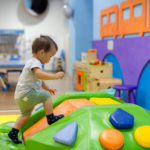
How Kids With Autism Play: What It Looks Like and Why It’s Different
| QUICK ANSWER
Kids with autism do play, but play often looks different than the constant back-and-forth conversation and cooperative games associated with typical peer play. Many children with autism engage in parallel play, playing alongside peers doing similar activities without constant direct interaction, for longer and more consistently than their peers do. This isn’t a lesser form of play or a sign a child dislikes other kids. It’s a genuinely valid form of social connection that often serves as a bridge toward more interactive play over time. |
Why Autistic Play Gets Misread So Often
It’s a common misunderstanding that children with autism dislike social relationships and prefer to play entirely alone, but this misreads what’s actually happening in a lot of cases. Children with autism generally do value play with their peers, and many are able to play together effectively, just often through more visual and hands-on communication rather than the constant verbal back-and-forth more typical of neurotypical peer play1. Close observation of children with autism playing together has documented genuine coordination and connection happening through channels that are easy for an outside observer to miss entirely: following each other’s hand movements like turns in a conversation, humming parts of the same song together, or reacting to what a peer just built or did.
What Parallel Play Actually Is
Parallel play describes children playing near each other, often doing similar activities, without constant direct interaction. It’s a typical stage of development for all young children, usually around ages 2 to 3, but for many children with autism it persists longer and plays a more significant, ongoing role in how they connect socially2. Rather than being at odds with social play, parallel play functions as a genuine pathway toward more interactive forms of play, giving a child the chance to observe peers, absorb social information at a comfortable pace, and gradually build toward more direct interaction without the immediate pressure of constant back-and-forth exchange.
- Parallel play: playing alongside peers, often with similar activities, without constant direct interaction
- Visual and physical communication: following hand movements, mirroring actions, shared attention to an activity
- Longer duration: parallel play often persists longer for children with autism than for neurotypical peers
- A bridge, not a dead end: parallel play often supports the gradual development of more interactive play skills
Children With Autism Do Form Real Friendships and Imaginative Play
Play that looks different from typical peer play still carries real developmental and social value. A study looking at imaginative play specifically found that children with autism with imaginary companions showed a stronger understanding of others’ perspectives and stronger social skills than children with autism without imaginary friends, and this held true regardless of a child’s language ability3. This suggests that these play profiles, including imaginative and pretend play, are more similar to the general population than commonly assumed, and that autistic children’s capacity for connection through play runs deeper than a surface glance might suggest.
| PULL QUOTE
“Playing alongside another child may look less social to us, but for many children, parallel play can be a meaningful way to share space, build comfort, and engage with others.” — Ashley Fitzenreider, BCBA, LBA, Senior Regional ABA Director, Westside Children’s Therapy |
What Actually Helps Kids With Austism Build Peer Connection
Rather than pushing a child with autsim straight into fast-paced, verbal group play, starting with structured, lower-pressure opportunities tends to work better: a shared activity with a peer who has a similar interest, a relaxed setting without a large group, and permission for the child to engage at their own pace without being pressured into constant direct interaction. Over time, many children move from playing comfortably near others toward more direct engagement, and celebrating each small step, sharing space, observing others, brief exchanges, matters more than expecting an immediate leap into fully cooperative play.
Frequently Asked Questions
Does parallel play mean my child doesn’t want friends?
No. Parallel play is a genuine, valid form of social connection, not a sign of disinterest in peers. Many children with autism who engage primarily in parallel play still deeply value their relationships with others.
Should I push my child to interact more directly with peers?
Gentle, low-pressure opportunities tend to work better than direct pushing. Let your child engage at their own pace, and celebrate small steps toward more interaction rather than expecting an immediate shift.
Is it a problem if my child still prefers parallel play at an older age than their peers?
Not necessarily. Parallel play can persist longer for children with autism and still serves a meaningful developmental purpose, functioning as a bridge toward more interactive play rather than a stalled stage.
Can children with autism have imaginary friends and engage in pretend play?
Yes. Research has found children with autism and their play profiles, including imaginative play, are more similar to the general population than often assumed, and imaginary friends are associated with stronger social understanding.
How can I tell if my child is genuinely struggling socially versus just playing differently?
Look for whether your child seems relaxed and engaged during their preferred style of play, versus signs of distress, isolation, or genuine loneliness, which are the signals worth addressing directly rather than the play style itself.
Different Doesn’t Mean Disconnected
Kids with autism play, connect, and build friendships, often in ways that look different from typical peer play but carry just as much real social meaning.
If you have questions about supporting your child’s social and play development, our ABA and OT teams are glad to help. Call us at 815-783-2544 or submit a contact form.
Know a parent worried their child aith autism who doesn’t want to play with other kids? Share this with them. It might be exactly what they needed today.
Clinically verified by Ashley Fitzenreider, BCBA, LBA, Westside Children’s Therapy
Where to Go Next