Serial Casting for Clubfoot: What Parents Should Know Before and After Treatment
| QUICK ANSWER
Serial casting is the first phase of the Ponseti method, the global standard of care for clubfoot, involving weekly gentle manipulation and casting to gradually correct the foot’s position, most often paired with a minor procedure called a percutaneous Achilles tenotomy. A large study found 94.7 percent of feet achieved full correction using this method, with an average of about five casts required. What comes after casting, consistent long-term bracing, matters just as much as the casting itself, since relapse is common when bracing isn’t followed closely. |
What Serial Casting for Clubfoot Actually Involves
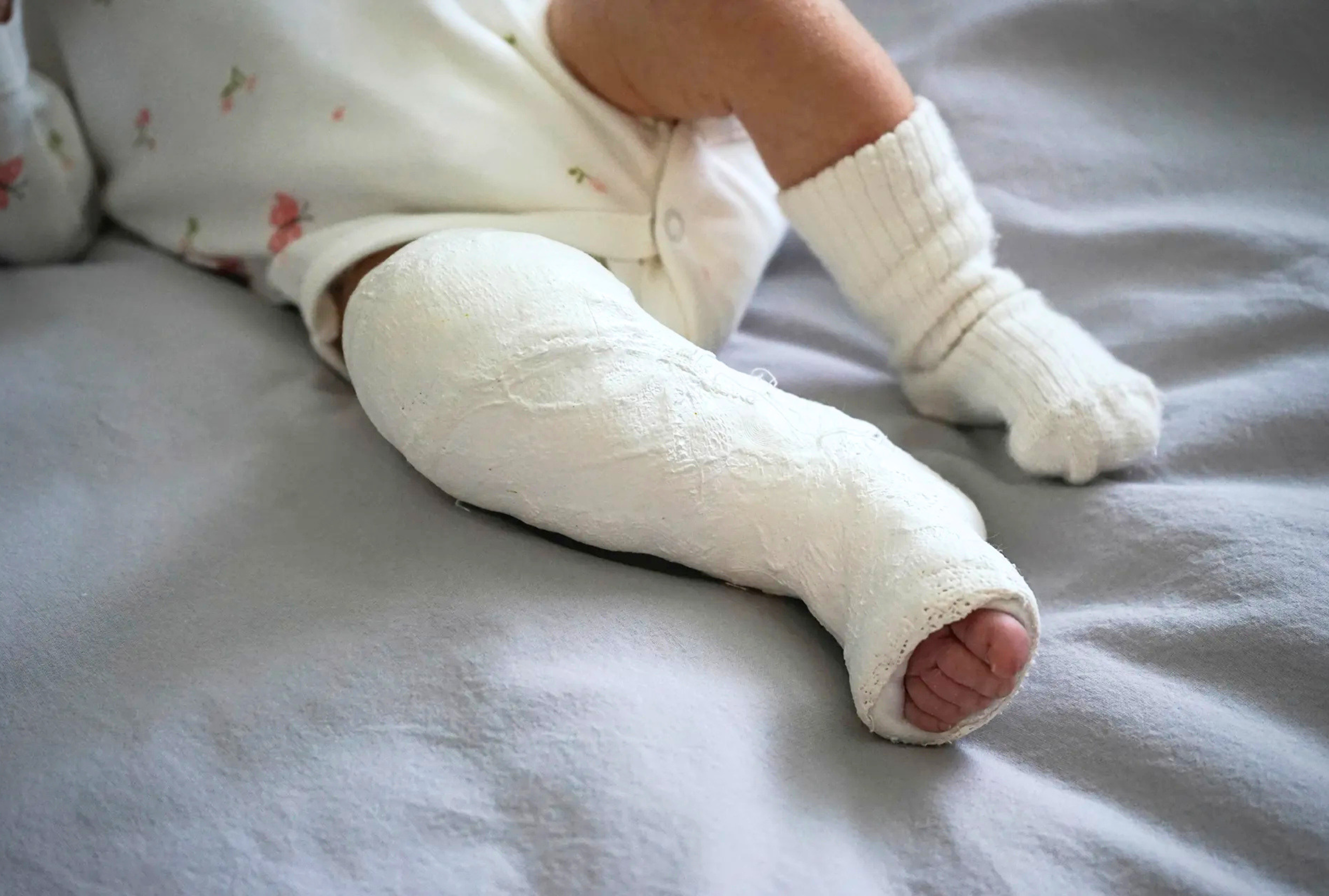
The Ponseti method, the globally recognized gold standard for treating clubfoot, uses corrective serial casting followed by a maintenance bracing phase1. Treatment typically begins with weekly gentle manipulation and casting, gradually repositioning the foot over a period of several weeks. A large retrospective study of 550 affected feet found the average number of casts required for correction was about 5.18, with treatment most effective when started early, since earlier initiation reduces both the number of casts needed and improves overall outcomes2.
Why a Small Procedure Is Often Part of the Process
For many children, casting alone isn’t enough to fully correct the tightness in the Achilles tendon that keeps the foot pulled into a specific downward position. A minor procedure called a percutaneous Achilles tenotomy, a small, precise release of the tendon, is required in the majority of cases to achieve full correction, and in one large study this was needed in 77.2 percent of feet treated3. This isn’t a sign that casting failed. It’s a standard, expected part of the protocol for most children going through this process.
The Bracing Phase Matters as Much as the Casting Itself
Once casting achieves correction, treatment shifts to a bracing phase designed to maintain that correction as a child continues to grow. The standard protocol involves wearing a brace 23 hours a day for about three months, then transitioning to nighttime-only wear for several more years, often four to five4. This phase is where many families underestimate how much ongoing commitment clubfoot treatment actually requires, and it’s also where research has identified the clearest link to long-term success or failure.
- Casting phase: weekly manipulation and casting, often paired with a tenotomy
- Bracing phase: 23 hours a day for roughly three months, then nights only
- Extended maintenance: nighttime bracing often continues for four to five years
- Ongoing follow-up: regular check-ins to monitor for early signs of relapse
| QUOTE
“We tend to see a lot of kids with clubfoot later in life, after regression has occurred. Often this is due to poor management with adequate bracing and orthotics, but we’ve also seen children who were casted elsewhere and didn’t get the same results we typically see. This is often because they weren’t casted for enough time, or didn’t receive enough correction.” |
Why Some Children Present Later, or Regress After Initial Success
Most clubfoot treatment begins immediately at birth under an orthopedist’s care, but not every case follows that path. Some children go undiagnosed early on, particularly with milder presentations, and some children who were successfully corrected as infants regress later due to inconsistent bracing. Research directly examining this connection found that brace compliance was significantly associated with recurrence, underscoring that the bracing phase, not just the initial casting, is where long-term outcomes are genuinely determined5. A child presenting later, or after a relapse, isn’t starting from a failed process. They’re often returning to a process that works well when it’s followed through consistently, and serial casting remains an effective option in these situations too, not just for newly diagnosed infants.
Frequently Asked Questions
How many casts does clubfoot treatment typically require?
Research shows an average of about five casts, though this varies by child and tends to be lower when treatment starts earlier.
Is a tenotomy a sign that casting didn’t work?
No. This minor tendon-release procedure is a standard, expected part of the protocol for the large majority of children treated with the Ponseti method.
Why does the bracing phase last so long?
Bracing maintains the correction achieved through casting while a child continues to grow, and research has directly linked consistent bracing to lower relapse rates over the following years.
What happens if my child’s clubfoot was missed early on or has relapsed?
Serial casting remains an effective treatment option even for children presenting later or experiencing a relapse, not just for newly diagnosed infants.
Is relapse common with clubfoot treatment?
Relapse is a recognized risk, and research has found it’s significantly associated with how consistently the bracing protocol is actually followed after casting ends.
A Well-Established Path, With Real Long-Term Commitment
Serial casting for clubfoot has a strong, well-documented track record, and understanding both the casting and bracing phases helps families know what to expect at every stage, whether treatment is starting at birth or later.
If you have questions about serial casting for your child, our physical therapy team is glad to help. Call us at 815-783-2544 or submit a contact form.
Know a family navigating a clubfoot diagnosis or relapse and unsure what to expect? Share this with them. It might be exactly what they needed today.
Clinically verified by Abbie Zaremba, PT, DPT, Westside Children’s Therapy
Where to Go Next
- 5 Reasons to Start Serial Casting Early
- Pediatric Serial Casting at Westside Children’s Therapy
- Contact Westside Children’s Therapy
- ‘Fast Cast’ and ‘Needle Tenotomy’ Protocols with the Ponseti Method to Improve Clubfoot Management in Bangladesh. PMC.
- Evaluating the Effectiveness of the Ponseti Technique in Treating Idiopathic Clubfoot: Long-Term Outcomes From an Indian Tertiary Care Centre. PMC.
- Evaluating the Effectiveness of the Ponseti Technique in Treating Idiopathic Clubfoot: Long-Term Outcomes From an Indian Tertiary Care Centre. PMC.
- Infrared Thermal Imaging for Evaluation of Clubfoot After the Ponseti Casting Method. PMC.
- Correlation Between Socioeconomic Status and Brace Compliance in Idiopathic Clubfoot Deformities. PMC.