Best Chair for an Child with Autism: A Guide by Sensory Need
| QUICK ANSWER
There’s no single best chair for every child with autism, since the right choice depends on what a child’s sensory system is actually seeking. Spinning chairs deliver quick, alerting vestibular input in a small footprint. Rocking chairs offer slower, more rhythmic movement suited to calming or transitions. Compression and pod-style chairs provide deep pressure input that many children find grounding. Classroom-style active seating, like the Compass chair, supports postural stability and focus during seated work. Matching the chair to the specific sensory need it needs to meet matters more than any single product, and our occupational therapy team can help you figure out which one that is. |
Start With the Sensory Need, Not the Chair
The most common mistake in choosing a sensory chair is picking based on what looks appealing rather than what a child’s sensory system is actually seeking. Vestibular needs call for chairs that provide rocking or spinning motion. Proprioceptive needs call for weighted or pressure-stimulating chairs that offer a grounding sensation. Postural and core-strength needs call for active seating that keeps small stabilizing muscles engaged during focused work1. Identifying which of these your child needs most is the real first step, well before comparing specific products.
Spinning Chairs: Fast, Alerting Vestibular Input
A spinning chair sits on the floor and rotates in place, giving rotational input with the child’s weight fully supported underneath them. This is alerting input, not calming, so it fits best before focus time or as a way to discharge energy, not as part of a wind-down routine. Almost every bowl-style spinning chair on the market tops out around a 220-pound weight limit, so check the listed capacity carefully for an older or larger child2. The one non-negotiable safety rule: never spin a child who can’t signal you to stop. Child-led spinning, where the child turns themselves rather than being pushed, is self-limiting in a way that adult-driven spinning isn’t, which is part of why it’s generally the safer option.
- Best for: quick, intense vestibular input in a small footprint
- Look for: a wide, stable base, a weight capacity that matches your child’s size, and child-controlled spinning
- Best used: before focus time or to burn off energy, not right before bed
- Skip if: your child cannot reliably signal when they need the spinning to stop
Rocking Chairs: Slower, Rhythmic Movement
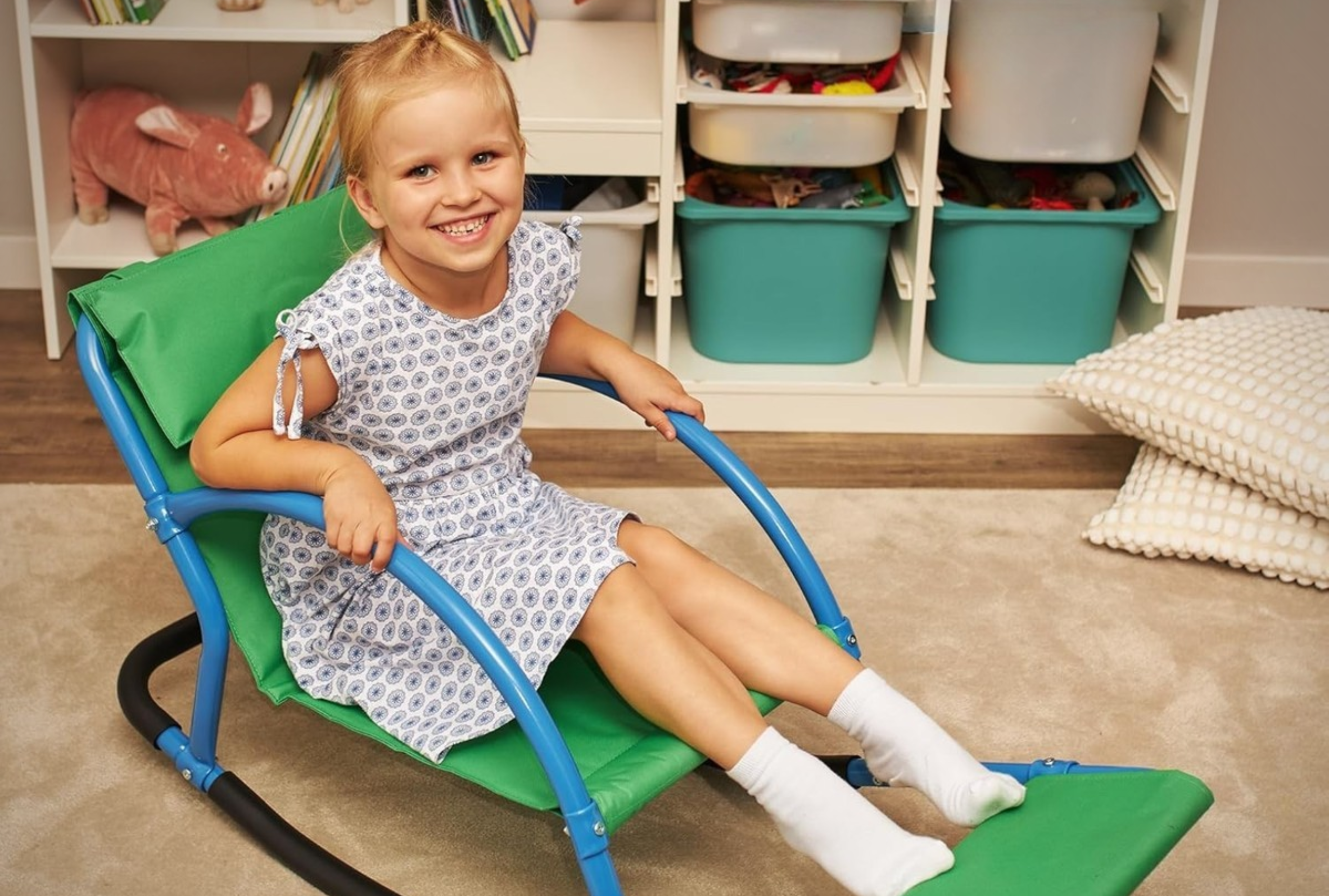
Rocking is a natural, self-soothing movement for many children with autism, and a rocking chair offers that input in a more sustained, gentler way than a spinning chair does. Rocking chairs tend to work well for reading, homework, or general calming, since the rhythmic motion can be maintained for longer stretches without becoming overstimulating. Weighted rocking chairs add deep pressure input on top of the rocking motion, which some children find especially calming, and reclining versions combine the movement with a more restful, laid-back position for children who want both at once.
Compression and Pod Chairs: Deep Pressure and Enclosure
Pod-style and compression chairs, sometimes called peapod chairs, wrap around a child to provide the sensation of being hugged, which many children with sensory processing differences find genuinely regulating. These are typically inflatable, soft-sided seats that a child can climb into and press against, offering deep pressure input without requiring another person to provide it. This category tends to work especially well for children seeking enclosure and containment specifically, distinct from the movement-based input a rocking or spinning chair provides.
Classroom-Style Active Seating
For seated work at a desk or table, purpose-built active seating, like the Compass chair and similar classroom options, allows small, continuous movement while a child stays generally in place, supporting postural stability and focus rather than providing the more intense input of a spinning or rocking chair3. These are generally the right category when the goal is helping a child stay regulated during schoolwork or mealtimes, not for dedicated sensory breaks.
| PULL QUOTE
“The right chair is the one that matches what your child’s body is actually asking for, calming input, alerting input, or deep pressure, and those are three different chairs.” — Allyson Chrystal, M.S., MOT, OTR/L, Vice President of Pediatric Therapy, Westside Children’s Therapy |
Frequently Asked Questions
What’s the single best chair for a child with autism?
There isn’t one. The right chair depends on whether a child needs alerting vestibular input, calming rhythmic movement, deep pressure, or postural support during seated work.
Is a spinning chair or a rocking chair better?
Neither is universally better. Spinning chairs give quick, alerting input suited to energy release, while rocking chairs give slower, more sustained input suited to calming and transitions.
Is it safe to let my child spin in a sensory chair unsupervised?
Only spin a child who can reliably signal when they need it to stop. Child-led spinning, where the child controls the motion themselves, is generally safer than being spun by someone else.
What should I look for in a compression or pod chair?
Look for a soft, enclosed design that provides deep pressure and a sense of containment, and check the weight capacity, since many pod chairs are designed to fit more than one child at once.
Does my child need an occupational therapist to figure out the right type of chair?
It can help, especially if you’re unsure what your child’s sensory system is actually seeking. An occupational therapist can assess your child’s specific sensory profile and recommend equipment suited to it.
Matching the Chair to What Your Child Actually Needs
The best sensory chair isn’t a single product. It’s whichever category, spinning, rocking, compression, or active seating, actually matches what your child’s sensory system is seeking.
For more sensory-friendly product ideas, see our Sensory Gift Ideas for Kids with Special Needs guide. If you’d like a professional assessment of your child’s sensory profile, our occupational therapy team is glad to help, and our ABA team can help build sensory tools like these into a broader daily routine if your child is already receiving behavioral support. Call us at 815-783-2544 or submit a contact form.
Know a family trying to figure out which sensory chair actually fits their child’s needs? Share this with them. It might be the answer they’ve been looking for.
Clinically verified by Allyson Chrystal, M.S., MOT, OTR/L, Vice President of Pediatric Therapy, Westside Children’s Therapy
Where to Go Next
- Sensory Chair Types and How to Choose. Rehabmart.
- Best Sensory Spinning Chairs for Autism & Autistic Kids. Spectrum Unlocked.
- Classroom Seating Option: The Compass Chair. Rifton.